 BY BRIAN CROSS

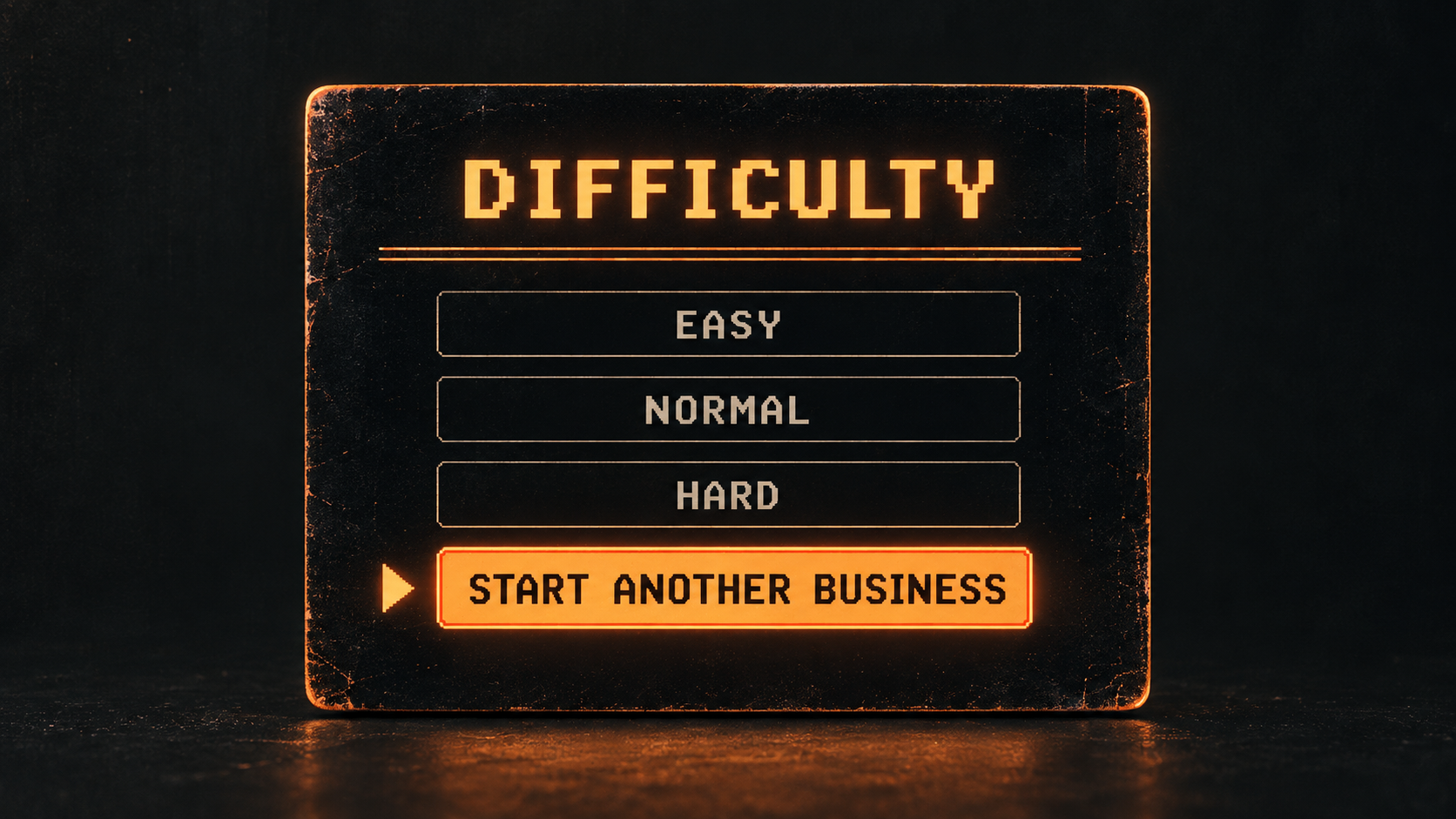
Two people show up to build a deck on the back of your house.
One's never built a deck, but he's got AI and a stack of YouTube tutorials. "All the answers are right there," he says. $1,000.
The other's been building decks for 20 years. $5,000.
You already know who you pick. Not because the newbie is dumb, or because AI is useless — it's because a deck holds people up in the air, and the failure mode isn't "it looks a little off," it's "someone falls through it at a party two years from now." AI is great at giving you the right answer to the question you knew to ask. It's much worse at telling you the rim joist is rotted before you've framed the whole thing on top of it. That's not a knowledge gap.
That's a judgment gap, and judgment only gets built one way: by being in the room when something goes wrong and having to figure out why.
I'm not writing this as an AI skeptic. I use it constantly, I think it's the biggest productivity unlock most of us will see in our careers, and I'll die on the hill that the businesses ignoring it are going to get lapped. But I keep seeing companies confuse "AI can produce the output" with "AI can make the call," and those are not the same skill.
And when I zoom out, I think that confusion is quietly breaking the pipeline that produces the next generation of people with judgment — the "20-year deck builder," except in marketing, ops, finance, whatever your trade is.
So here's my actual POV — not "AI good" or "AI bad," but what I think the three parties in this system should be doing differently.
What companies should be doing
Stop using AI to eliminate the learning tier — use it to compress the timeline to get there.
The old model: hire a junior, give them the low-stakes reps (the first draft, the data pull, the client email nobody's betting the account on), let them get burned a few times where the cost of being wrong is small, and over a few years they earn access to the calls that matter. That tier is exactly what companies are cutting, because AI now does the low-stakes rep faster and cheaper than a 23-year-old. Makes sense on a spreadsheet.
Terrible long-term trade, because you're not just cutting a cost center — you're cutting your own future supply of people who can do the $5,000 job.
What I'd do instead:
- Give juniors the AI, not instead of the reps — as a faster loop through more reps. A junior who used to write one client email a day can now draft ten, get feedback, and revise. That's not replacing judgment-building, that's accelerating it — if someone senior is actually closing the loop.
- Build "triage" explicitly into how decisions get made. Not every decision is a deck. Most are reversible, cheap to test, low-blast-radius — let AI-assisted juniors run those, fast, and don't make them wait for senior sign-off on stuff that doesn't need it. Reserve the senior review for the handful of decisions per week that are actually structural — pricing, legal exposure, brand reputation, anything hard to undo.
Companies that make everything wait for senior review are just as broken as the ones that let juniors freelance on load-bearing calls.
- Pair, don't gate. The fastest way to build judgment in someone is to have them sit next to the decision, not just receive the verdict. If AI is doing the first draft, the human mentorship time you save should go straight into "here's why I changed this," not into more meetings.
- Measure people on judgment, not output volume. If AI 10x's everyone's output, output stops being the differentiator. What you're actually paying for now is who knew which 10% of the output to trust and which 90% to override. Start evaluating for that explicitly, especially in junior reviews, or you'll accidentally train people to defer to the model instead of interrogate it.
What colleges should be teaching
Most curricula are still optimized for a world where the scarce skill was producing the analysis, the essay, the code. That skill is now cheap. The scarce skill is knowing whether the output is any good, and colleges are behind on retooling for that.
- Teach students to be editors, not just authors. Have them generate a first draft with AI and then defend, in front of the class, every place they changed it and why. That's the actual skill gap employers are complaining about — not "can you use AI" (everyone can) but "can you tell when it's wrong."
- Build in reps with irreversible-feeling stakes. Case competitions, live client projects, anything where a bad call has a visible consequence someone has to sit with. Judgment doesn't develop from hypotheticals graded on a rubric; it develops from something that felt like it mattered and where you were wrong once.
- Stop treating "knows the material" and "has done the thing" as equivalent. A marketing student who's written twenty AI-assisted campaign briefs that never touched a real budget or a real client hasn't done the thing. Internships, co-ops, and applied capstones need to stop being a nice-to-have line on the transcript and become the actual core of the degree, because that's the only place discernment gets tested against reality instead of a grade.
- Teach taste as a subject, not a vibe. This is the part closest to my own world — branding, design, writing. If every AI-assisted student portfolio, pitch deck, and website starts looking the same (you know exactly the look I mean), that's a failure of teaching taste, point of view, and originality as skills, not just teaching tools. Historically colleges assumed taste developed on its own through exposure.
In a world where the default output of every tool converges toward the same aesthetic middle, taste needs to be taught on purpose or it won't develop at all.
What students should be doing beyond the syllabus
This is the part students actually control, and it matters more now than it did five years ago, not less.
- Get reps where something real is on the line. A part-time job, a freelance client, a startup you help for free, a real budget you're accountable for — anything where the AI-assisted draft has to survive contact with a person who isn't grading you on a curve. That's where you build the pattern-recognition a resume can't fake.
- Practice disagreeing with the AI, on purpose, and being right about it. Don't just prompt and accept. Generate the output, then go find the flaw in it before anyone else does. That's the exact muscle employers are short on right now, and it's trainable — most people just aren't training it.
- Build a point of view, not just a portfolio. In a world where everyone has access to the same tools, the differentiator is whether you have taste and judgment that's identifiably yours. Read outside your field. Notice what you actually like and why, not just what performs well. If your work is indistinguishable from what a stranger would produce with the same prompt, that's a problem you can fix starting now.
- Chase the messy, unscalable experience over the polished, AI-optimized one. The job or project that looks bad on paper but puts you next to real decisions and real consequences will build more of the thing companies are short on than another certificate will.
The bottom line
AI didn't break the entry-level pipeline by being too good. It broke it by making the low-stakes tier cheap enough to skip — and nobody updated the system to make sure the judgment-building still happens somewhere else. Fixing that isn't about using AI less. It's about being deliberate — as companies, as schools, as individuals — about protecting and accelerating the one thing AI still can't do for you: earning the right to make the $5,000 call.